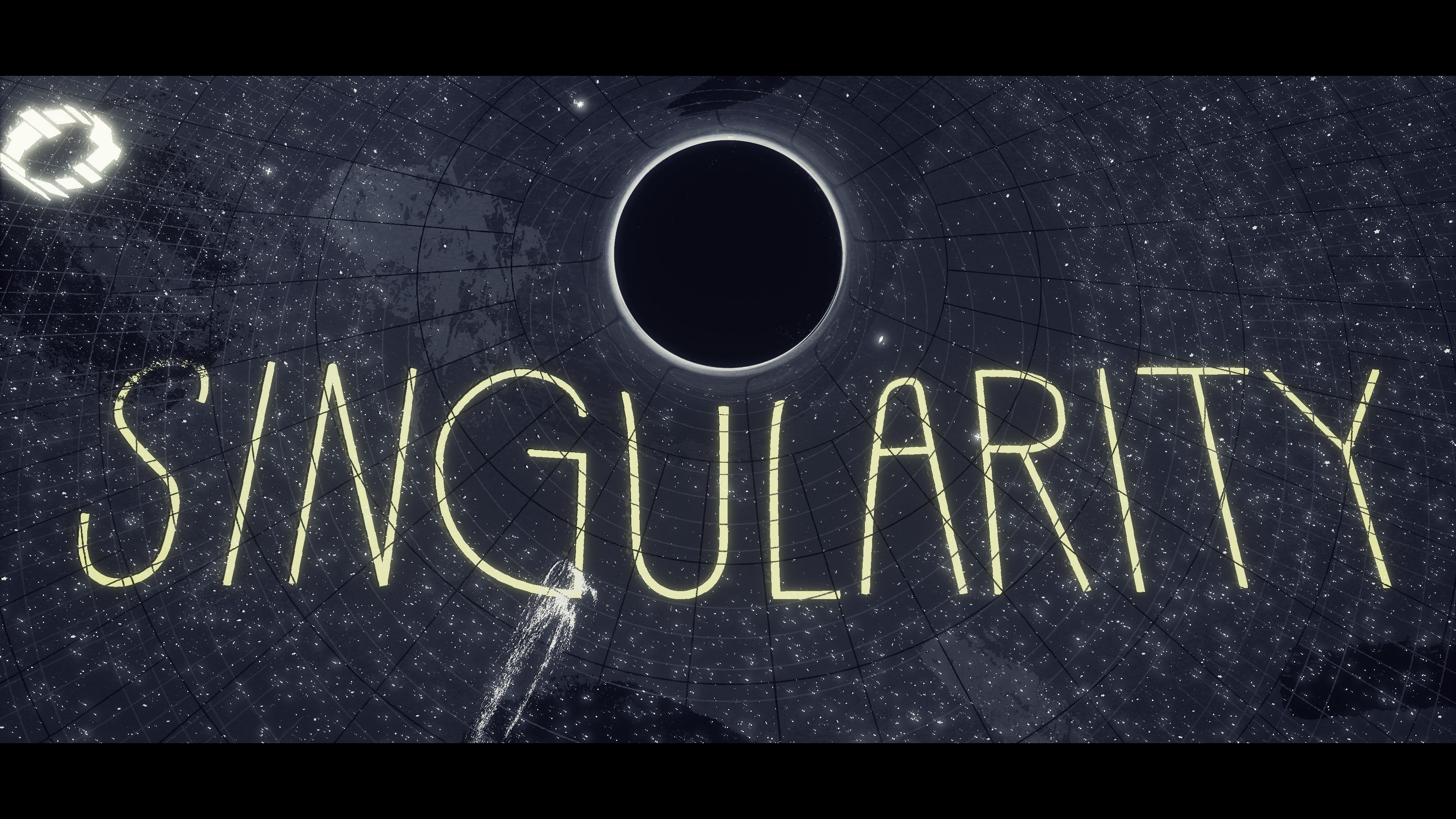
Genesis Noir Breaks the Boundaries on Atmospheres in Videogames.

Video games are increasingly becoming art. Its hard to imagine any other medium being able to craft an experience like Genesis Noir. Video game narratives have been evolving for a while now, but representation lagged behind for decades while AAA companies focused on the most realistic images they could produce (with the exception of Nintendo). That is until indie games started to gain legitimacy. As much as I criticized FEZ I have to give it credit for paving the way for games to experiment with their art and their atmosphere. If FEZ taught the industry to walk, Genesis Noir taught it how to teleport through space and time.
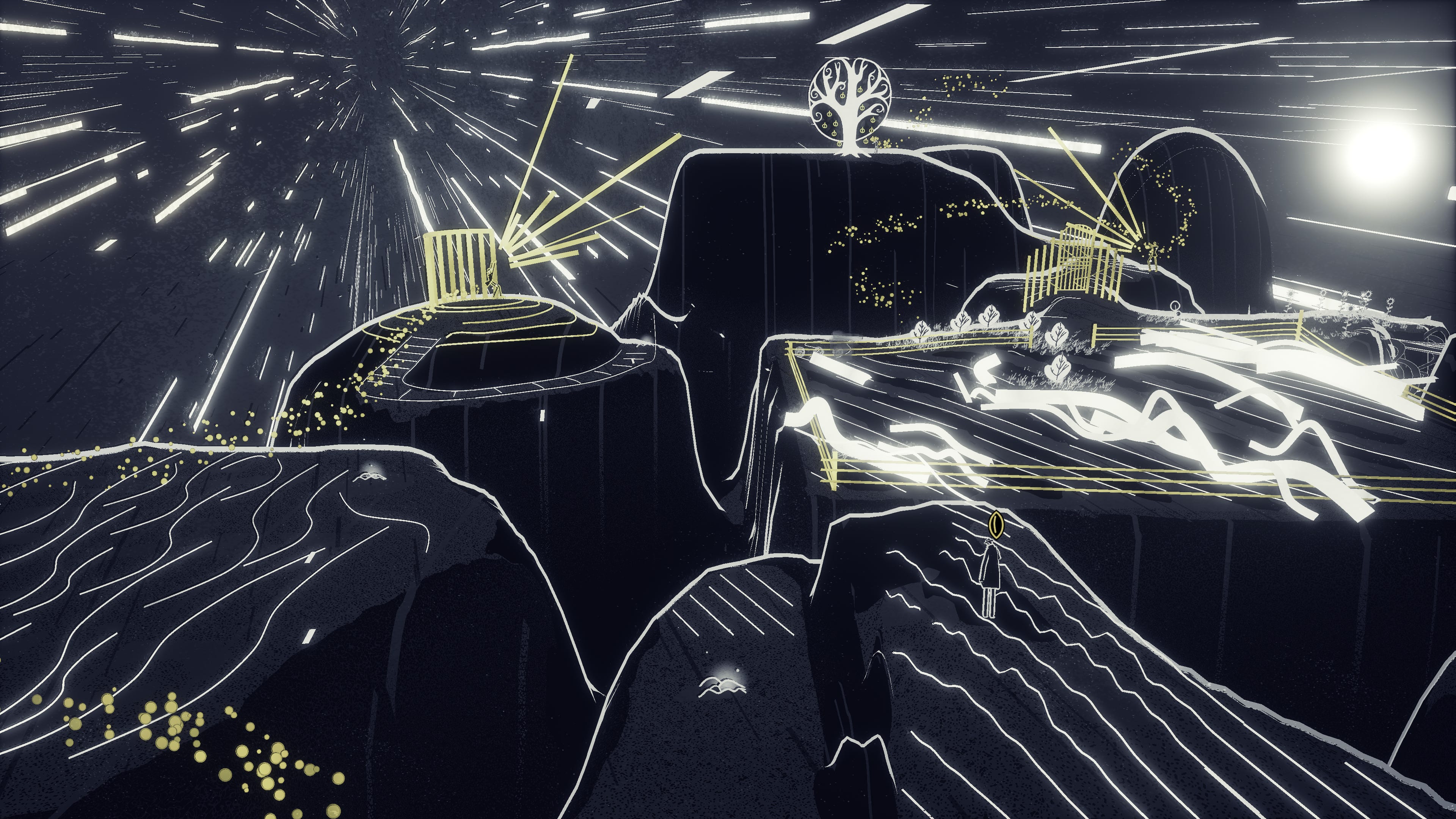
Genesis Noir is not difficult. The puzzles are incredibly easy, but they were never supposed to be difficult. The most difficult element is discovering what to do without a tutorial to hold your hand; it expects you to connect with the theme of the puzzle and to understand how the universe works (a technique perfected in the Witness). There are some spectacularly unique puzzles in Genesis Noir, but many of them are simple and repetitive (normally something I hate, but since they have symbolism in the story it totally works). Who cares about any of that though? This game isn’t about puzzles or difficulty. It’s about Jazz… and preventing the big bang or something.
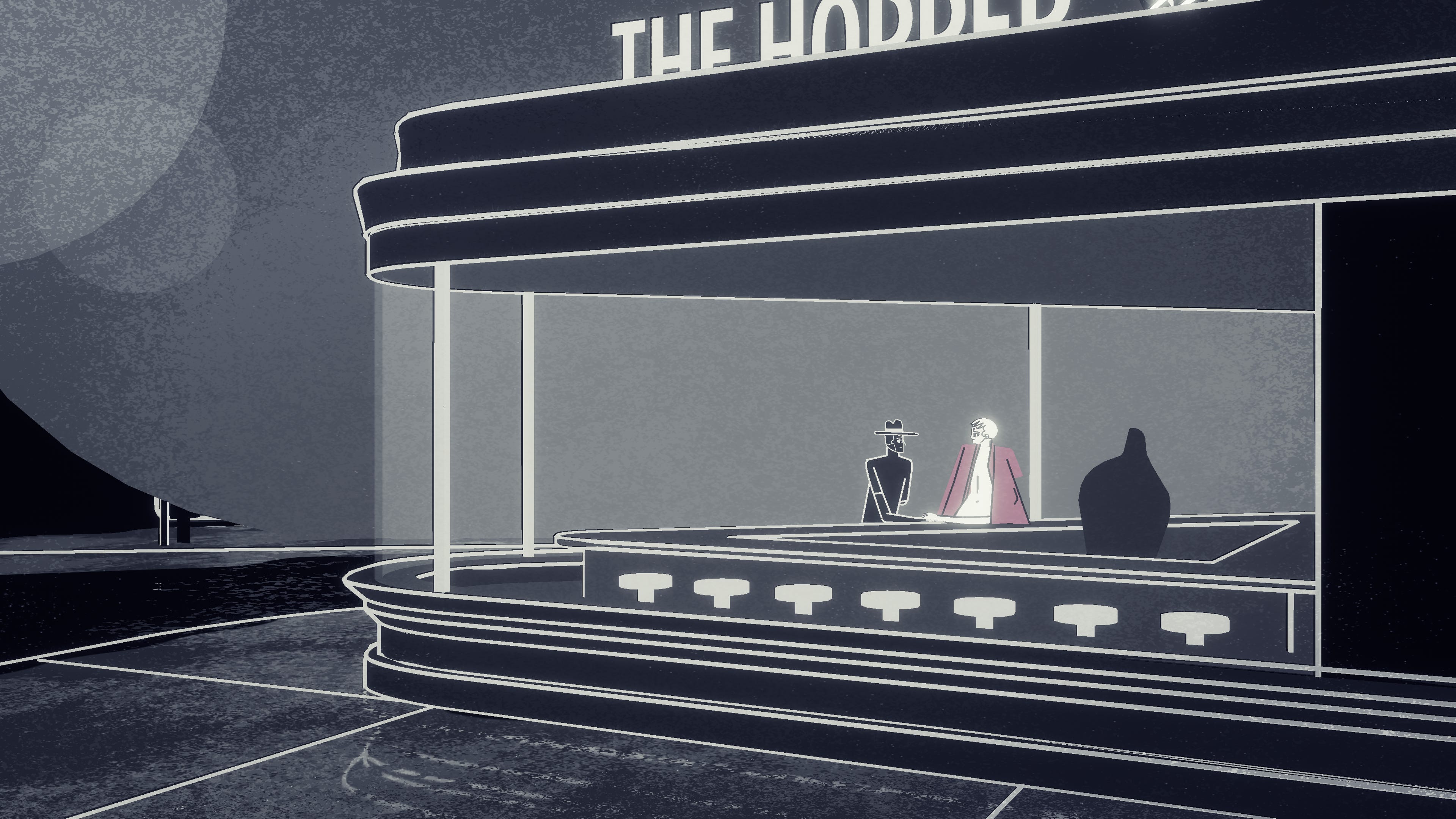
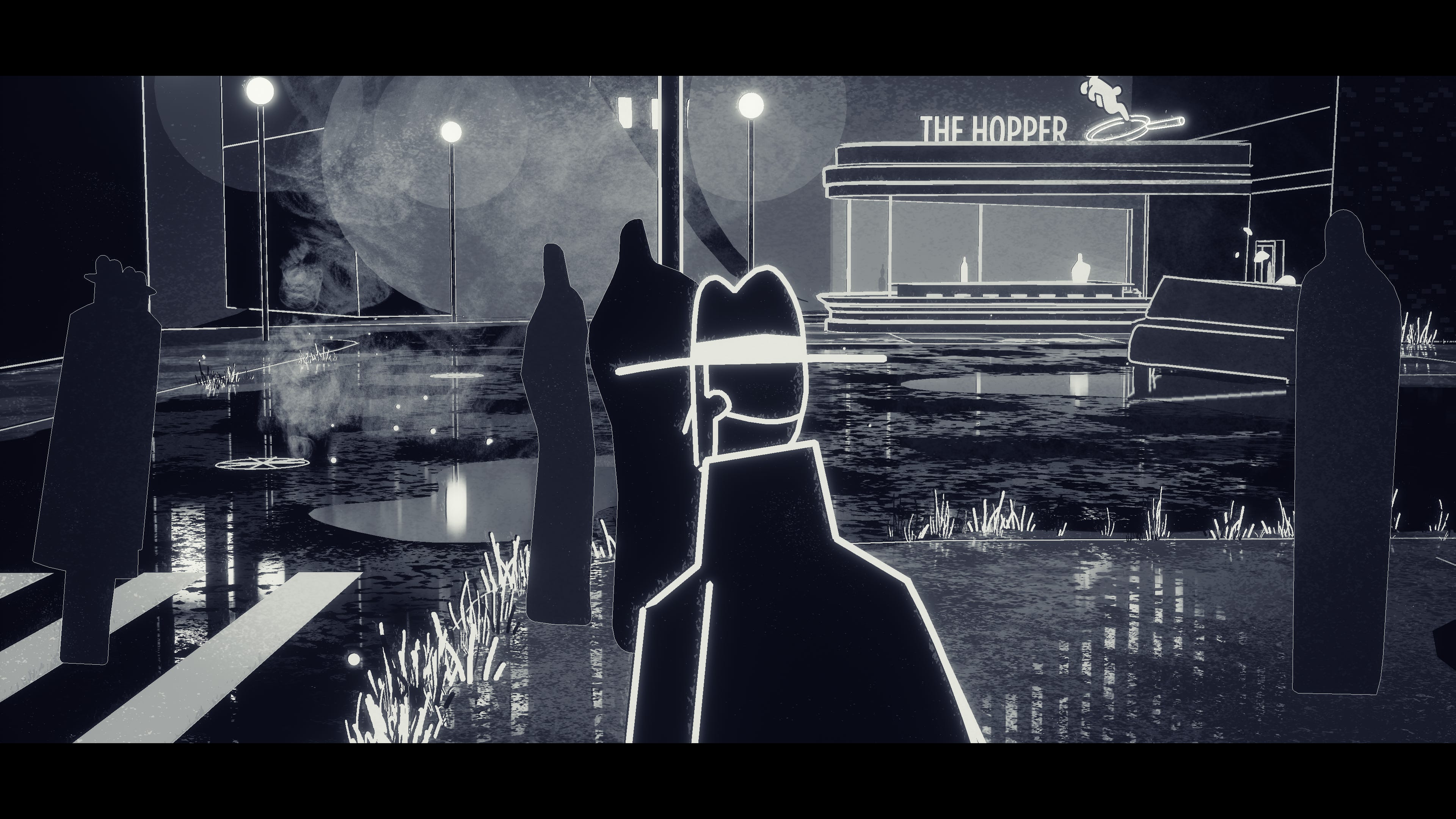
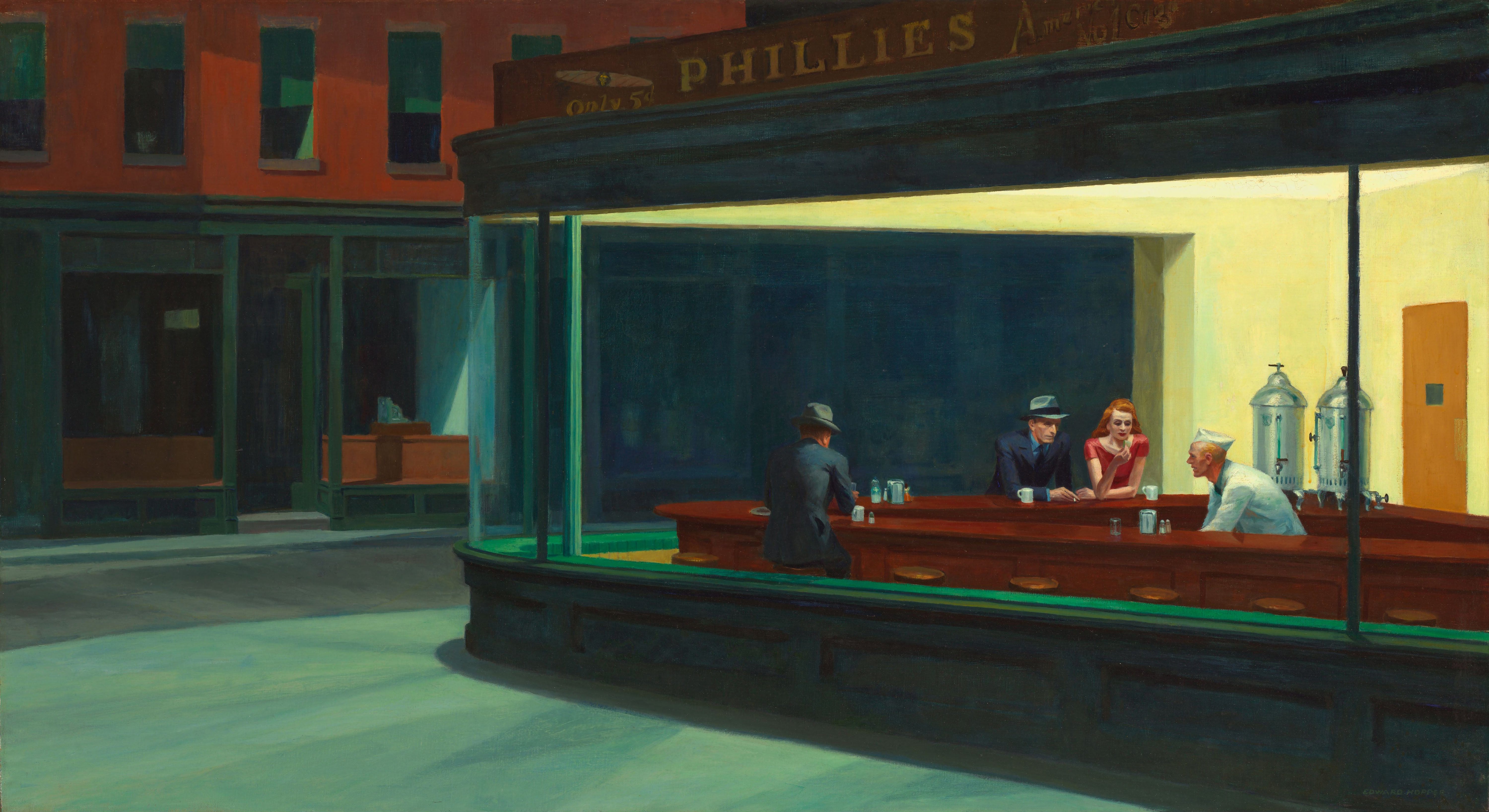
Genesis Noir is filled to the brim with interesting metaphors, cool references, and well framed atmospheric representations. This works extremely well when architecture is the star of the shot. In the opening act, an obvious reference to the diner in Nighthawks by Edward Hopper (it’s even called the Hopper) is the back drop for a gritty noir streetscape (its hard to call anything in this game gritty. It’s pretty grit).
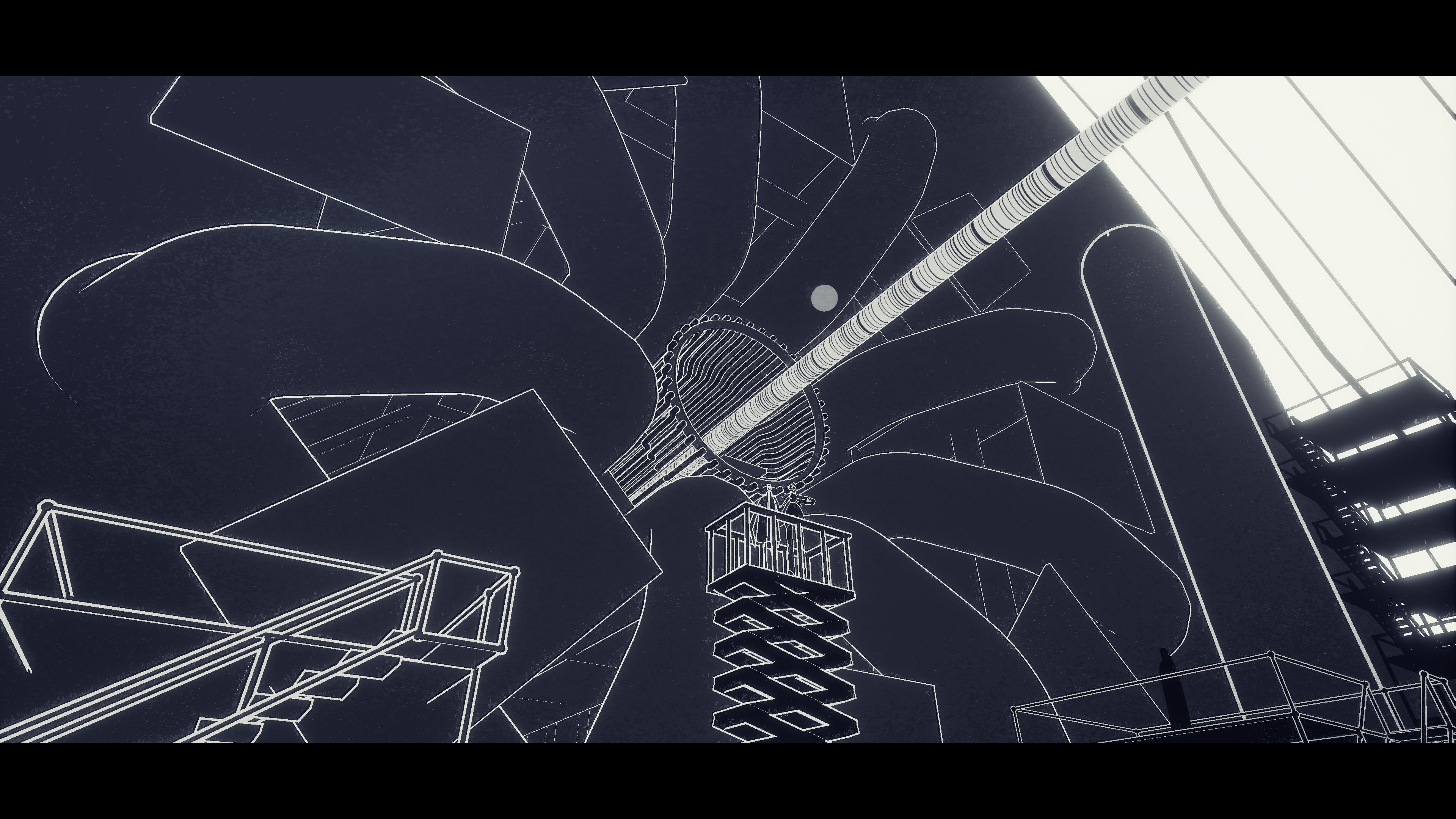
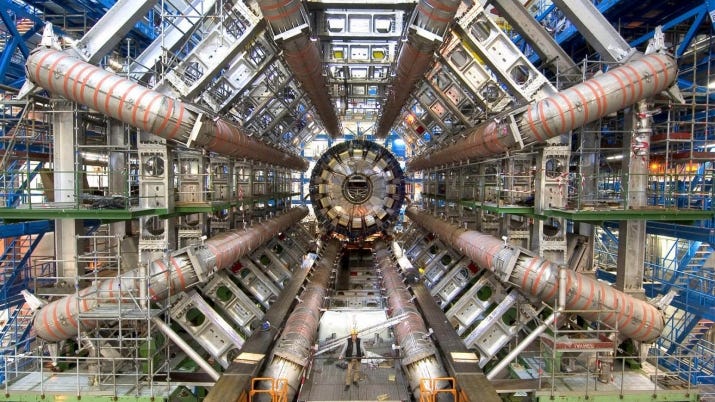
This game isn’t just grit. It’s edgy and crisp without losing any of the aesthetic that makes this game amazing. The machine on Mars uses the Large Hadron Collider to ask questions about the limits of human knowledge. The rendering of the LHC (on Mars) is intense.
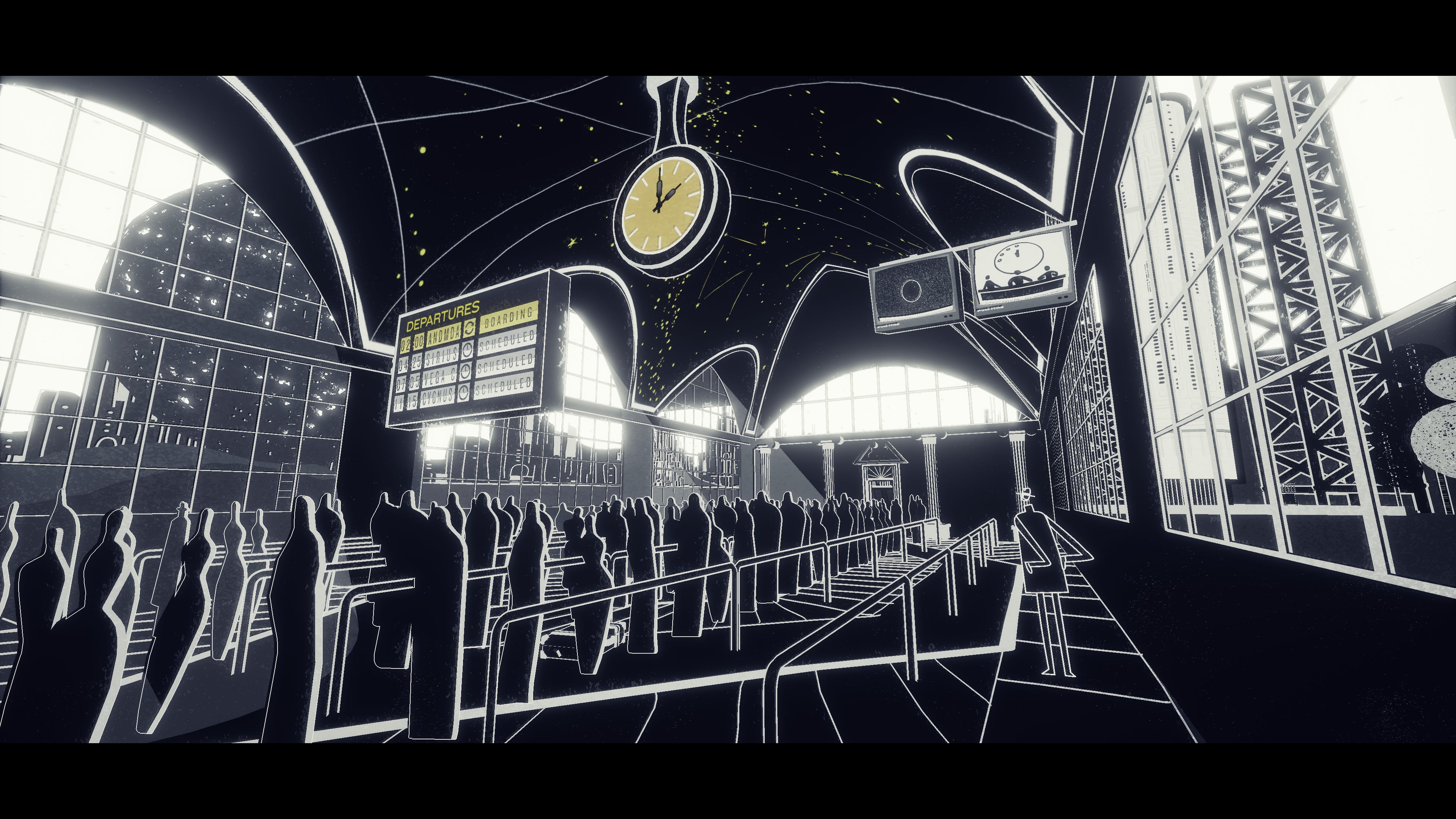
The train station invokes Grand Central Station in New York City. Sure, it’s much smaller, but the vaulted ceiling, the windows, even the clock design hearkens to elements of Grand Central. I’m obsessed with the clock design, it BELONGS in the vaulted ceiling design.
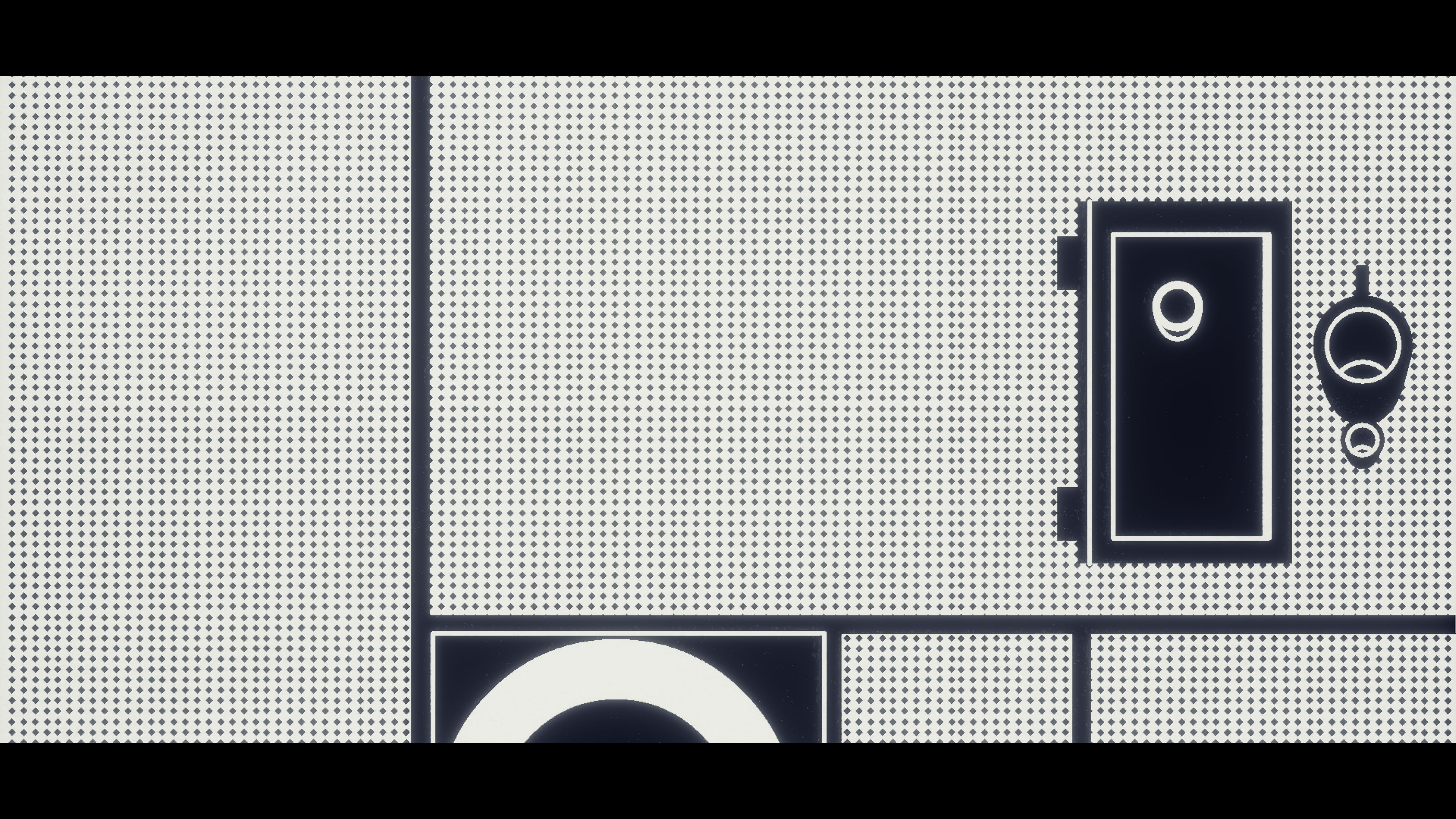
The treatment of traditional Japanese art, design, and architecture is respectful and beautifully stylistic. This rendering of a bamboo floor is unbelievable (I want it as a poster).
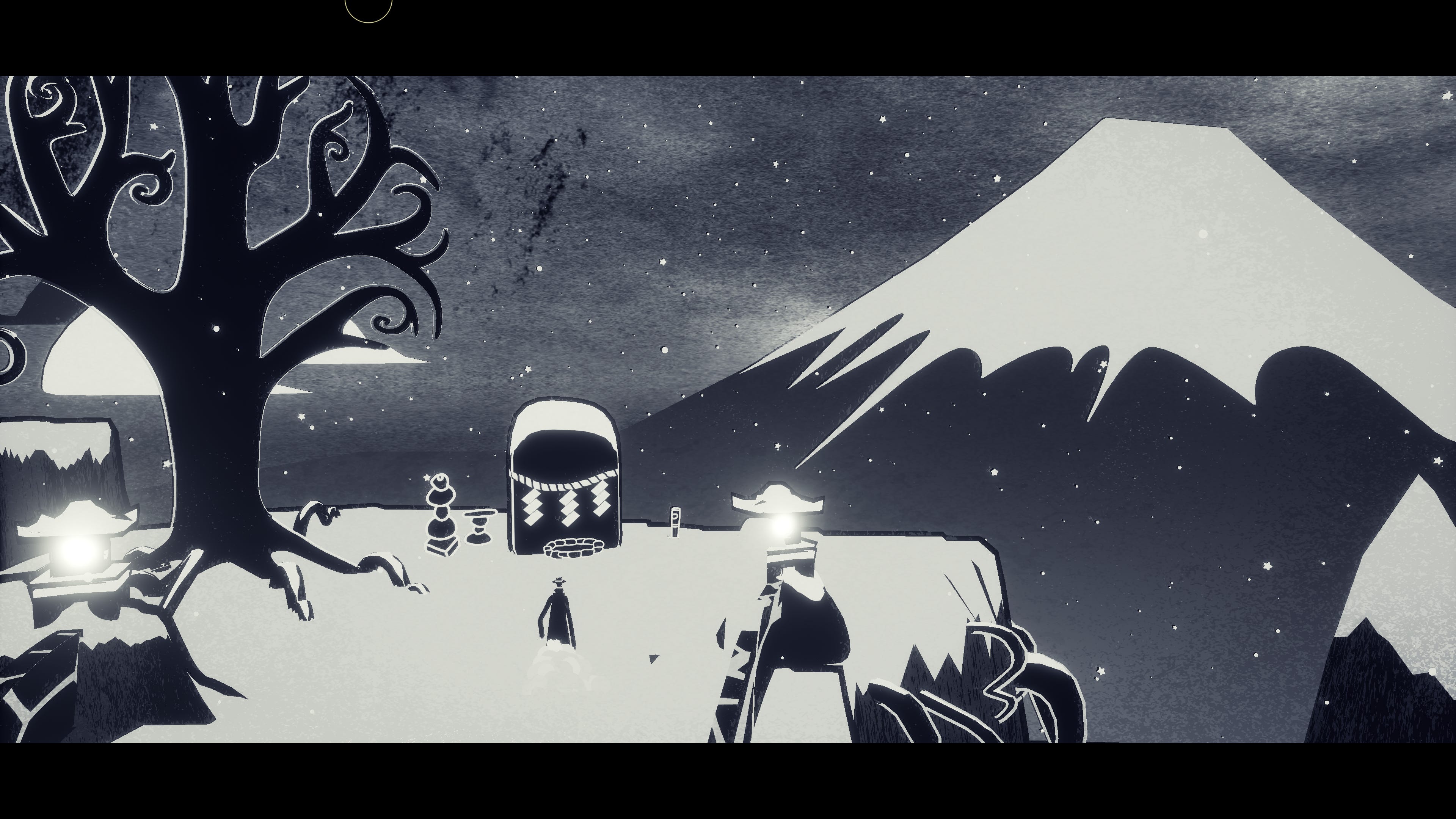
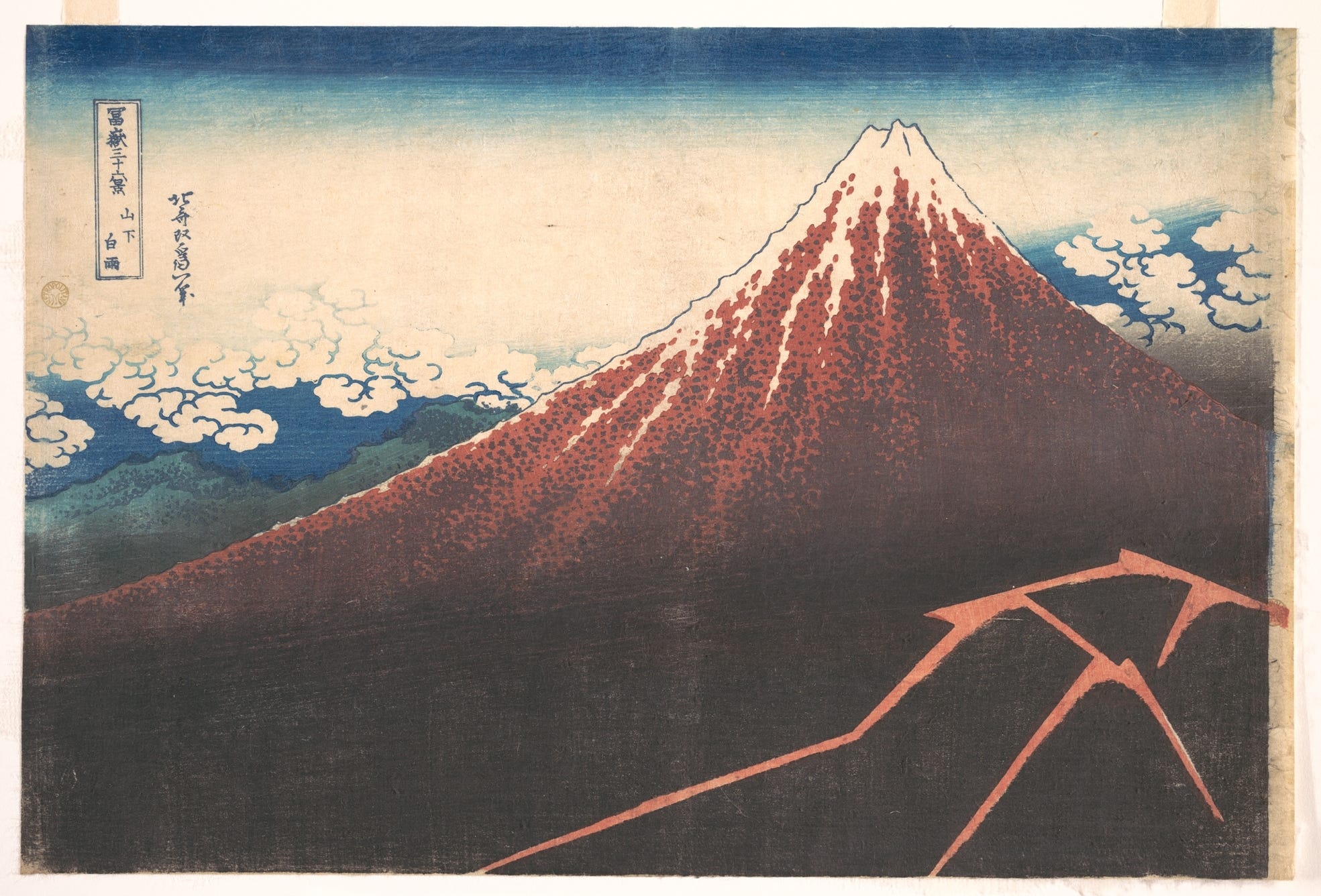
At the top of a mountain, a beautiful homage to the Thirty-Six Views of Mount Fuji by Hokusai.
Historic Japanese architecture creatively adjusts expectations of what constitutes a room. The room below is beautifully rendered to denote space despite a complete lack of walls. Three incomplete lines, a floating window, a hanging banner, a chest located between the floating bamboo platform and the “wall” are all the artist needs to let us know that this is a room. Atmospherically this is one of the most genius frames in the entire game. The room is steamy so it is unlikely that the character would see the walls, but instead a vague outline of space. It reminds me of Therme Vals by my favorite Architect Peter Zumthor.

The city plays the largest atmospheric role in the story. Towering buildings and streets impose on many scenes. At points lacking any actual walls, only showing doors or windows; another commentary on void as architectural composition. At times the looming buildings reminded me of the oppressiveness of Metropolis. At other times the buildings build excitement like the backdrop of a late night talk show (I have no idea why they are always pictures of city skylines, but they do feel exciting). The framing is always most creatively used in the city, I imagine this is intentional to capture the feeling of density versus the wide panoramic shots used in other puzzles. The framing becomes its own entity in the same way it does in graphic novels like Asterios Polyp.
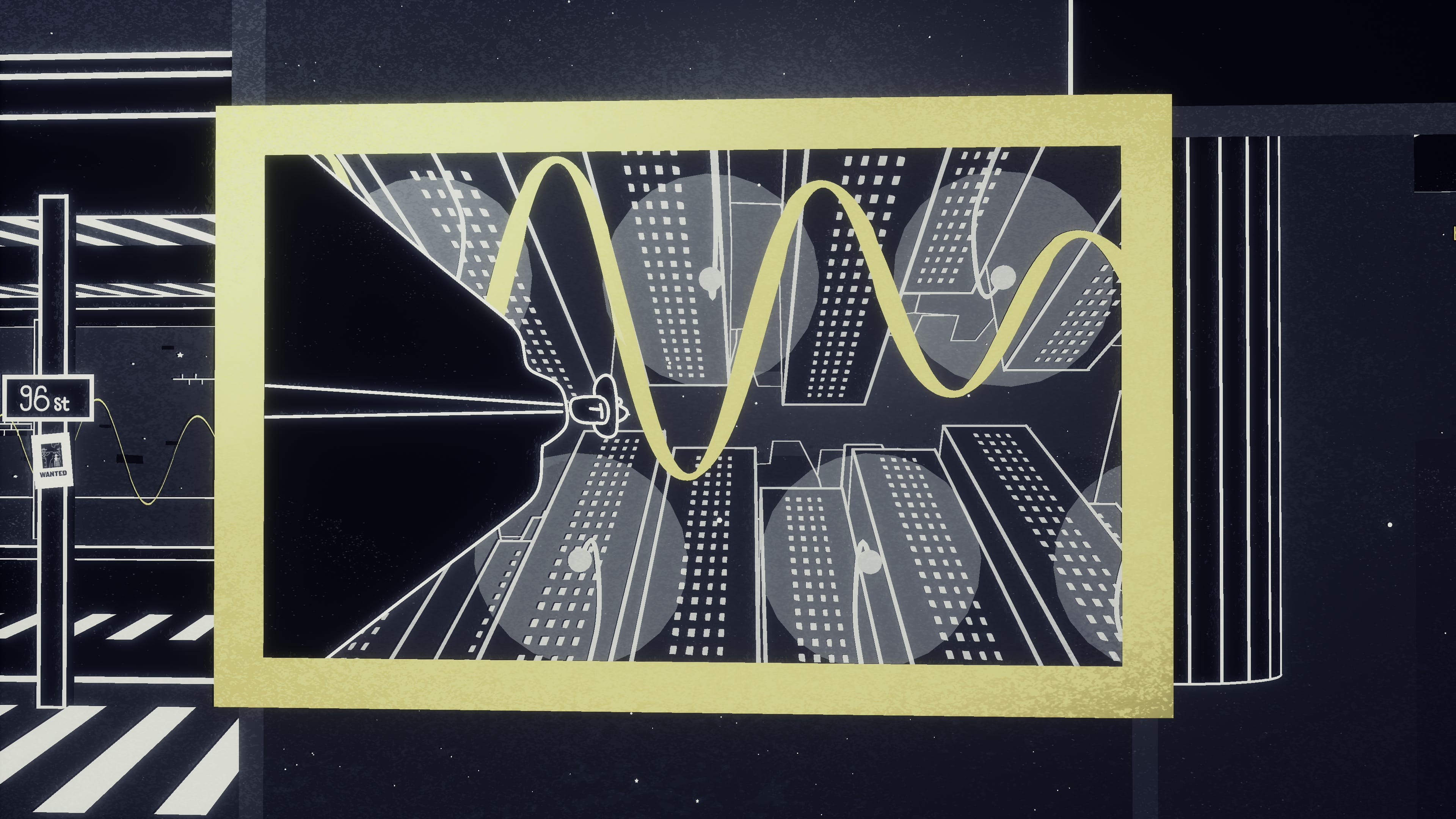
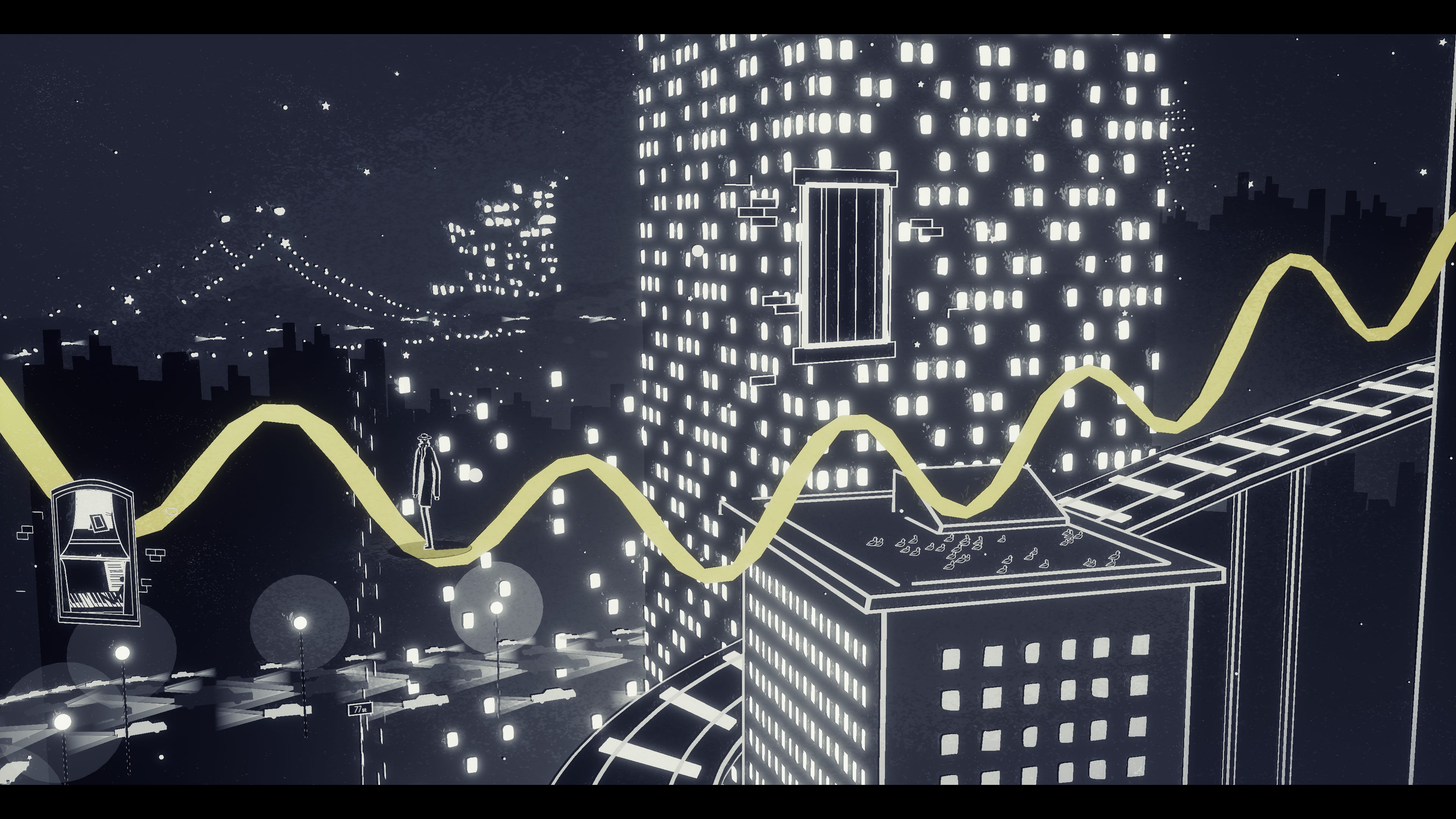
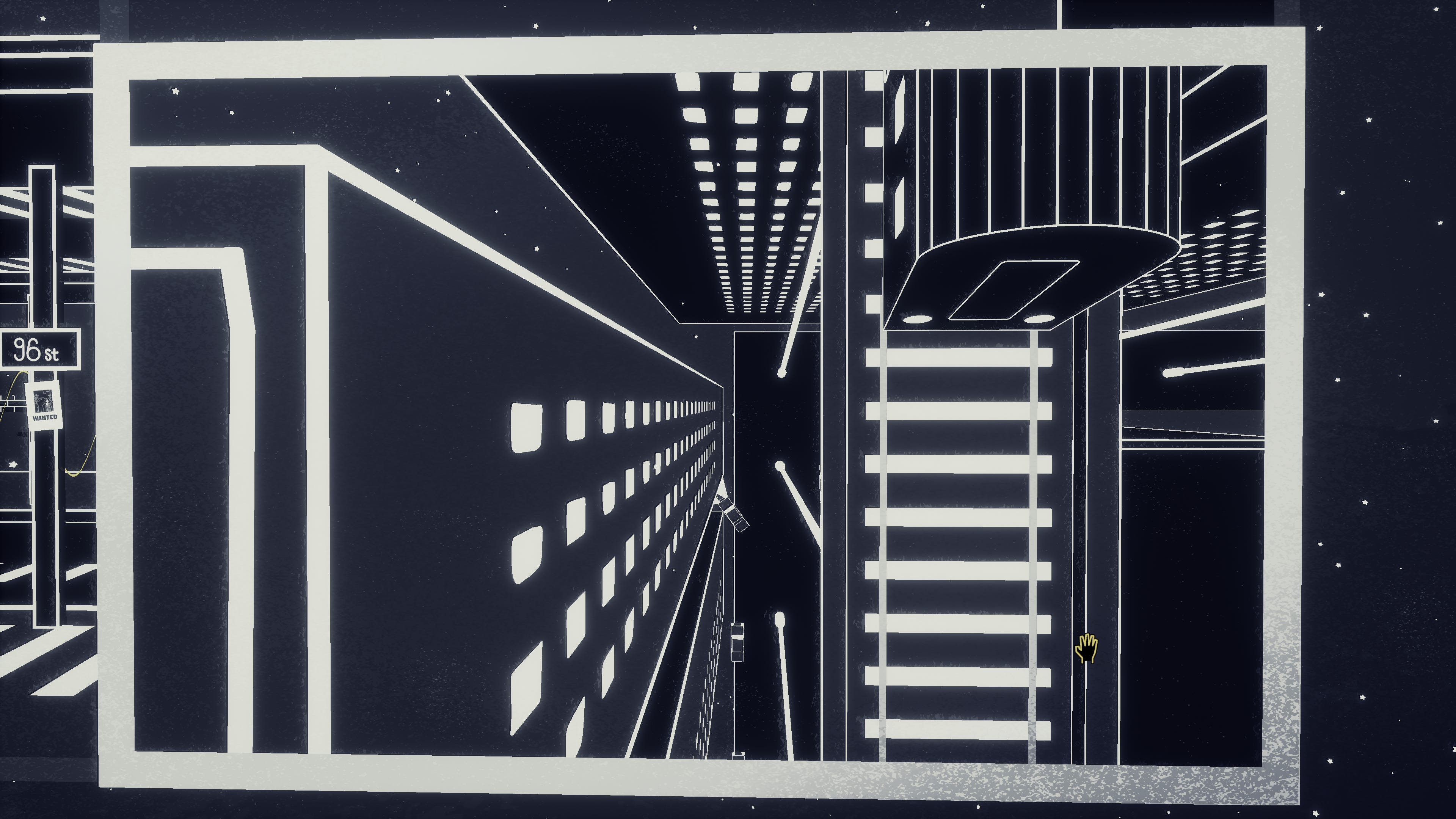
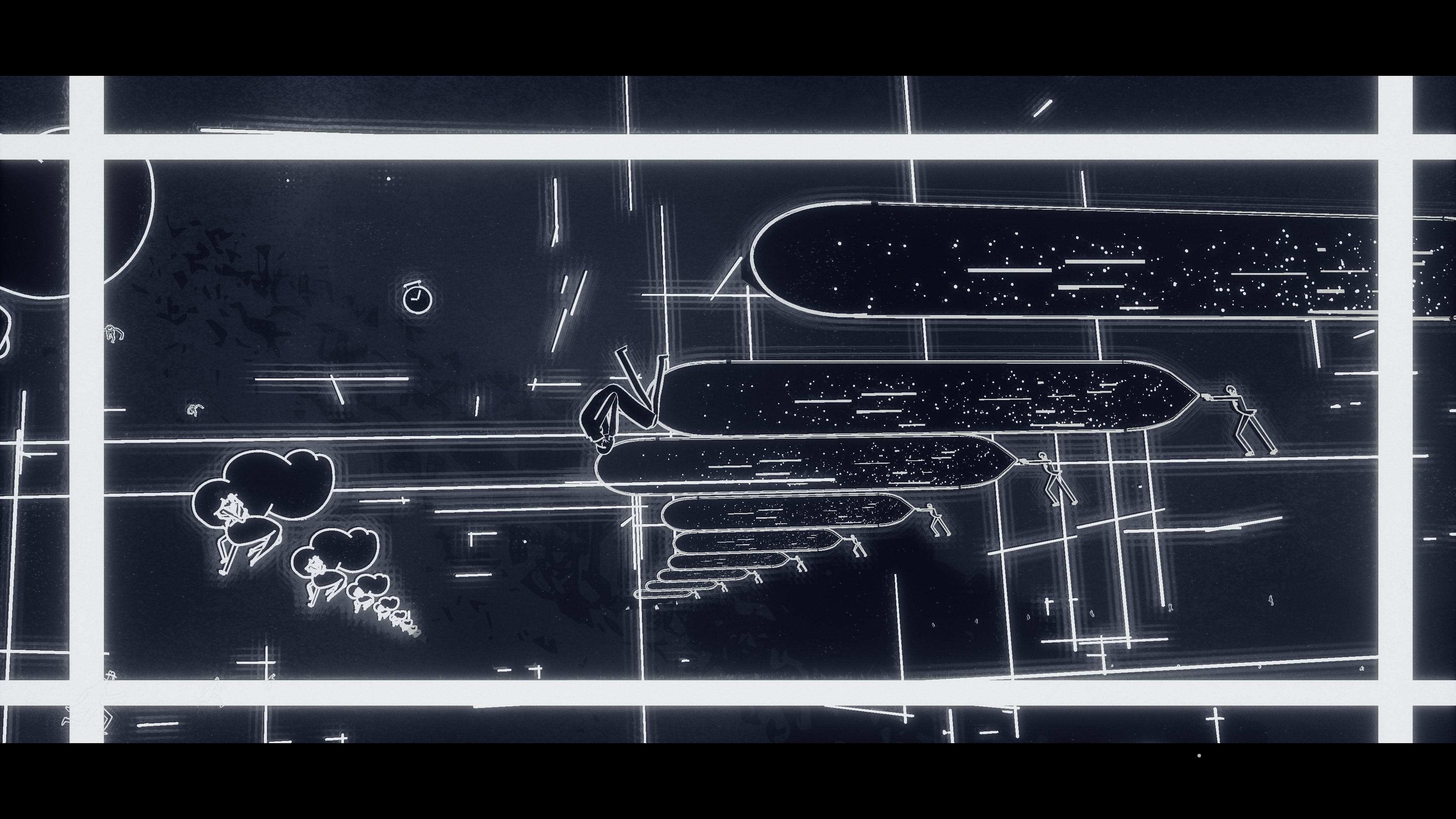
I have so many screenshots from Genesis Noir because every five minutes I was blown away by the composition of this game. Everything is impeccably choreographed between the music, the framing, the puzzles, the graphic design, etc. Genesis Noir is difficult to describe, so I’ll try to explain it with as few references to other media as possible. It’s like WarioWare, Metropolis, Soul, Birdman, Asterios Polyp, the bookcase scene of Interstellar, and any number of films by Michel Gondry all decided to be in a single experience, and some how it’s exactly what it should be; its about Jazz.